Posts

Importance of planting Fruits

Image
Fruit plants are a diverse group of plants that bear fruits, which are typically the edible, seed-bearing structures of flowering plants. These plants vary greatly in size, shape, growing conditions, and fruit types. Fruit plants play a crucial role in agriculture, ecosystems, and human nutrition. The cultivation of fruit plants dates back thousands of years and is still a cornerstone of global food production. Below is an extensive description of fruit plants, covering their characteristics, types, growing conditions, and importance. Leaves : The leaves of fruit plants vary from species to species. Some, like citrus trees, have thick, glossy leaves, while others, like grapevines, have broader, lobed leaves. The leaves perform photosynthesis, supplying the plant with the necessary energy to produce fruit. Flowers : Most fruit plants are angiosperms, which means they produce flowers. These flowers are often essential for pollination, a process that leads to fruit production....

Banana varieties in Uganda

Image
Bananas in Uganda are broadly categorized into five main types: East African Highland Bananas (Matooke) for cooking, plantains (Gonja) for roasting, beer bananas (Mbidde/Kayinja) for brewing, and dessert bananas (Sukali Ndizi/Bogoya) for fresh eating. Each plays a vital cultural and dietary role.  1. Cooking Bananas ( Matooke / East African Highland Bananas ) This is the most widely cultivated type and a massive staple in the Ugandan diet. These bananas are harvested green, steamed until soft, and mashed into a golden-yellow mash that is eaten with a variety of stews (meat, beans, or groundnuts).   Local Cultivars:   Nakitembe, Mbwazirume, Musakala, Namwezi . Improved Hybrids:  The National Agricultural Research Organization (NARO) has released improved, disease-resistant, and climate-hardy varieties such as the  NAROBan  series ( NAROBan1 - NAROBan6 , also known as  NARITA ) and  Kiwangaazi (M9) .   2. Dessert Bananas ( Sweet Ban...

Importance of shade trees in Coffee

Image
During this era of climatic change, shade trees are without a doubt very important in coffee farming. Their umbrella shaped canopies provide shade thus mitigating against excessive temperatures and heat stress that are responsible for flower and fruit abortion. Shade trees also provide numerous other benefits. Benefits Deep rooted shade trees recover soil nutrients from deeper soil horizons and transport them to their leaves. When the leaves fall and rot, they provide organic matter or manure which is released to the coffee plantation. This organic matter improves the soil texture and water retention thus availing the much needed water to the coffee. Besides, deep rooted trees don’t compete with the coffee for water and other nutrients. In addition, shade trees of the leguminous species capture much needed Nitrogen from the atmosphere and convert it into nitrates which are used by the coffee for numerous purposes.  Shade trees act as windbreakers to protect the coffee t...

Tips on establishing a Coffee garden

Image
There are two types of coffee – Robusta and Arabica. Robusta grows in low altitude areas and Arabica in high altitude areas. Below are tips on how to ensure you establish a coffee garden. Spacing: The spacing between Robusta plants is 10 feet by 10 feet and between Arabica ones is 8 feet by 8 feet. Dig  right size holes  – 2 feet long x 2 feet wide x 2 feet deep. While digging holes: heap the top soil on one side and bottom soil on another side. Add manure to the dug-out soil and return it into the holes. Mark the center of the holes and leave them for 2 – 3 months before planting. Obtain coffee plantlets from  Bwebajja Fruit Tree Nursery . During the planting season, plant very early in the morning or late in the evening. Remove the polythene pot cover before planting the seedling/cutting.  Provide temporary shade to the newly planted coffee plantlets and water in case of water stress. Water conservation channels/bands are important in coffee. When the c...

BWEBAJJA FRUIT TREE NURSERY

We are Uganda's specialist fruit tree suppliers - we have Mango, Apple, Pear, Jackfruit, Avocado, Guava, Citrus such as Oranges, Lemons, Tangerines, Grape fruit and Bananas, including Matooke, Cavendish (Bogoya), and Plantain (Gonja). We have quality Coffee seedlings and Cocoa. The most important thing in making fruit growing a pleasure, is getting  you growing the right varieties for your location. We have many years of experience of growing fruit across Uganda and are happy to help you establish or maintain your trees. As a social enterprise we support the planting of school and community orchards, and preserve old and rare varieties - as well as planting the orchards of the future.   We want to give people inspiration to plant trees and the skills to look after them. By buying our trees you are supporting this work.  We offer a range of services including planning orchards, training people how to maintain orchards, and supporting people looking at developing large...

What are the most profitable fruits to grow in Uganda Today?

Image
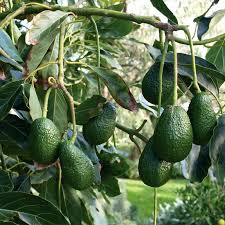
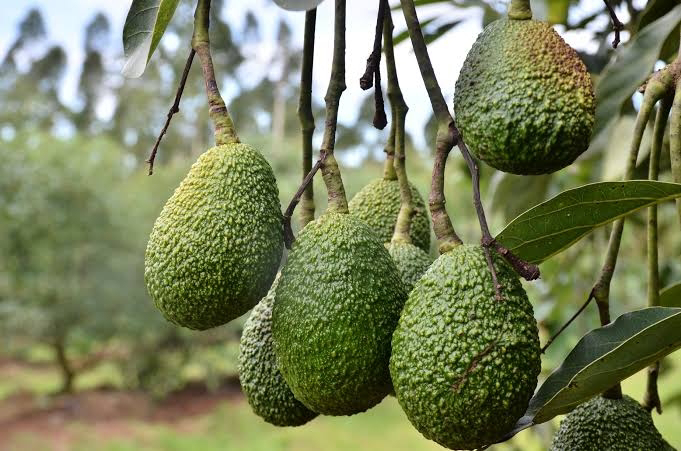
1. Hass Avocado fruits Uganda is one of the few countries that enjoys equatorial climate. Most districts in Uganda receive a minimum of two rainy season. Hass Avocado fruits are highly adapted to different rainfall conditions; however, the rain should be an average of 1,000–1,600mm per annum and well-distributed throughout the year. Avocado farming in Uganda presents a good opportunity not only for farmers, but a growing population of young people to venture into. The Ugandan market both domestic and export is growing but limited by the production capacity of the current farmers. The most popular variety for the export market is the HASS avocado. In Uganda, avocado is one of the most consumed fruits that is readily available in the market all year round. Going by the latest statistics, avocado has a fair share among the leading export crops and Ugandaa stands out as a major player in the avocado export market. Locally avocado is sold at the market place from betwee...

Fruit Farming Business

Image
Fruit farming has long been seen as a job for the poor, with the assumption that it is not a viable business. Unfortunately, this misconception has kept many people from recognizing the potential of fruit farming and the various benefits it offers.  People need to understand that fruit farming also requires capital, whether you are starting out or already running an established orchard. For instance, if you are growing Avocados, you need to prepare the land, set up your irrigation systems, purchase seedlings and manure, and outsource labor. All these need capital. Therefore, running a fruit farm can be considered a business, like retail, eCommerce, and operating a shop.  This blog explores the potential of fruit farming, its various benefits, and how to encourage the new generation of fruit farmers. Understanding Fruit Farming In fruit farming, you have many options, such as passion fruitss, tree tomatoes, pears, oranges, apples, mangoes, an...

Join Our Family Tree Project

Image
Since 2023, Bwebajja Fruit Tree Nursery has delivered 726 fruit trees to 26 schools across the Uganda. This nationwide family of orchards is comprised Mango, Avocado and Jackfruit seedlings at schools in 10 districts around the country. This initiative launched in 2023, donating fruit trees to schools in order to give young people a chance to experience the benefits of working with nature as well as improving local biodiversity. Building on its initial success, in 2023 the scheme expanded to include vegetables, herbs and spices ensuring that more urban schools with limited outdoor green space could also participate. This campaign is being powered by our school orcahrd Corporate Social Responsibility programme. Each orchard is intended to become a learning resource for pupils, empowering them to improve their local environment and combat climate change as well as provide them with fresh fruit. Successful schools will highlight how they intend to i...

Banana Propagation

Image
Banana,  Musa paradisiaca, is  a type of fruit that grows on a large herbaceous plant that is native to Southeast Asia. It is one of the world's most popular and widely grown fruit, with many varieties being cultivated for both commercial and home use. Bananas are long, curved fruits with smooth, yellow, and sometimes slightly green skin. The average length of a banana is about 7 to 9 inches, and it is about 2 to 3 inches in diameter. The skin of the banana is usually yellow when it is ripe, but it can also be green, red, or purple depending on the variety. The inside of a banana is composed of several fleshy, cream-colored segments, which are surrounded by thin, white membranes. The flesh of the banana is soft, slightly sweet, and has a slightly sticky texture. Bananas are one of the most popular and widely grown fruits in the world, with their largest production occurring in countries near the equator. They thrive in tropical and subtropical climates and are...

A guide to Banana production

Image
Banana is one of the major crops that promote food security and household incomes. Most of the banana and its bi-products are consumed domestically. It, therefore, has high potential of creating wealth for farmers in many parts of the country.  How to establish a banana plantation Selecting a site Select deep well-drained loam soil with high humus content. It is important to avoid acidic soils due to a lack of considerable amounts of nutrients. Preparing the field Bananas can be planted on fallowed land or newly established fields. On newly established fields, trees must be cut and some of the debris or obstacles from the forest, burnt. On fallowed land, the field should be simply slashed and left without burning because of the useful organic matter in the soil. A few days after slashing, the grass may be sprayed with herbicides to speed up organic matter breakdown. After cultivation, a couple of weeks should be set aside to allow germination of weed seeds which are the...

Hass Avocado Price in Uganda 2025

Image
The global avocado market seems to be absorbing Hass avocados in a fitting way. Volumes from avocado producing countries are increasing year after year without the prices collapsing. It is a trend that emerging producers like Uganda are keen to cash in on. The avocado industry as a whole has been successful in expanding its market share in other countries in recent years. Hass avocados from Africa are now entering new markets such as China, India and Japan. Uganda has not been left behind as it has recorded a steady climb in its avocado exports since  2012 . In  2019 , Ugandan avicados entered new markets in Russia and Oman. Price of Hass Avocado in Uganda Uganda exports Hass avocados mainly to the European Union (EU) and the Middle East. Smallholder farmers in Uganda have praised Hass avocado as the answer to poverty. Avocado exporters in Uganda currently buy at  US0.13 dollars  (about  UGX450-UGX500 ) per fruit and  US0.6 doll...

Hass Avocado Farming in Uganda

Image
Are you an Avocado farmer looking for a Hass avocado farming guide to increase yields in Ugandaa? Is your Hass avocado farm infested with pests and diseases? If yes, this guide will help you create a profitable farming venture. The guide will also help you identify pests, diseases, and the best fertilizer to increase yields by at least 30%. History of Avocado Farming in Uganda Avocados are evergreen trees that thrive best in subtropical and tropical regions. The fruit is also one of the most cultivated species in the world and is native to Mexico and South America. The fruit was introduced to other parts of the world in the 18th -19th century. The scientific name of Avocados is Persea Americana L. Avocados were introduced in Eadr Africs by the Portuguese during the 18th century. By 1939, improved varieties such as the Lula, Nabal, Puebla, and Linda had already been introduced. In Uganda, avocados are grown for the local market, but varieties such as the Hass are produced fo...

10 spices you can grow at home in small spaces

Image
In most kitchens, spices are a common feature. One may have an ample collection or simply stock the basics. However, did you know some spices can actually be grown at home? A lot of spices travel long distances before reaching the kitchen, growing spices at home will be the freshest one can get to add delicious flavours to dishes, while practising your hobby and connecting to the growing cycle. Here are the 10 spices one can grow at home. Cumin Cumin has a rich taste, earthy and warm with an edge of citrus. This spice adds instant depth to a dish. Use ground cumin instead of whole seeds in recipes if you want the flavour to diffuse evenly throughout. The common type of cumin has a brown hue but if you want to taste different varieties, with each one offering their own nuances in flavour, plant black, green, or white cumin. How to grow: Sow seeds in loose, fertile soil. Cumin thrives in hot places with a lot of sunlight. Seeds are harvested after the pink or white flowers bloom. Cumin s...